

Signing of a Senegal–Guinea-Bissau cross-border cooperation agreement: a step forward for the conservation of connected landscapes
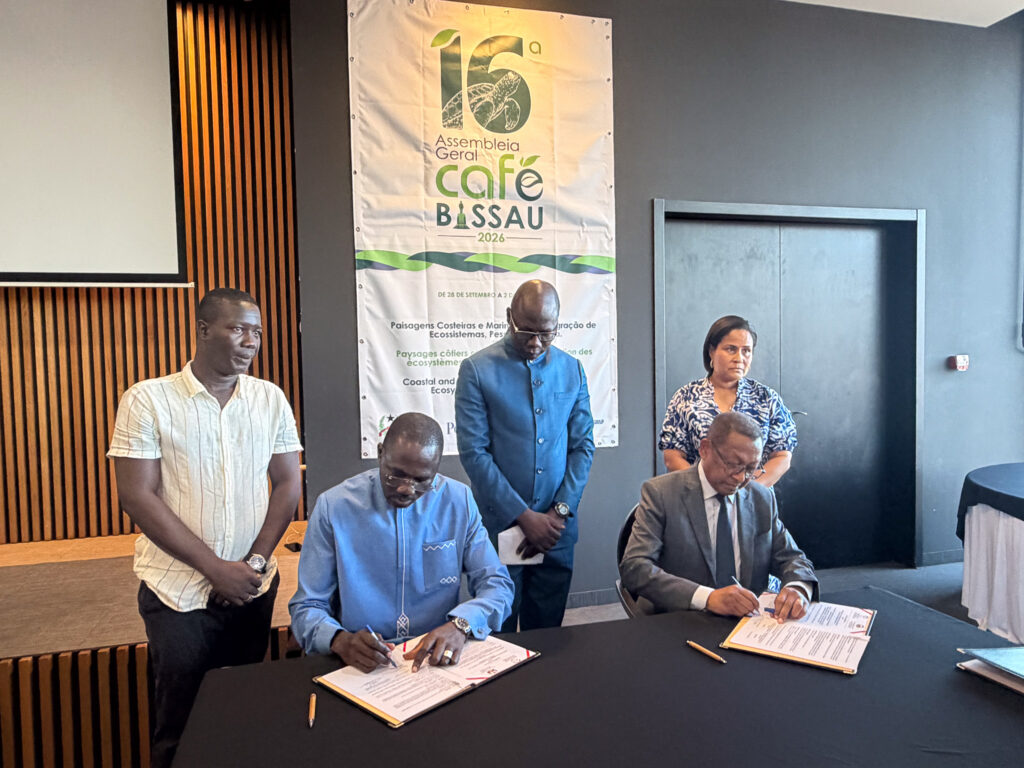
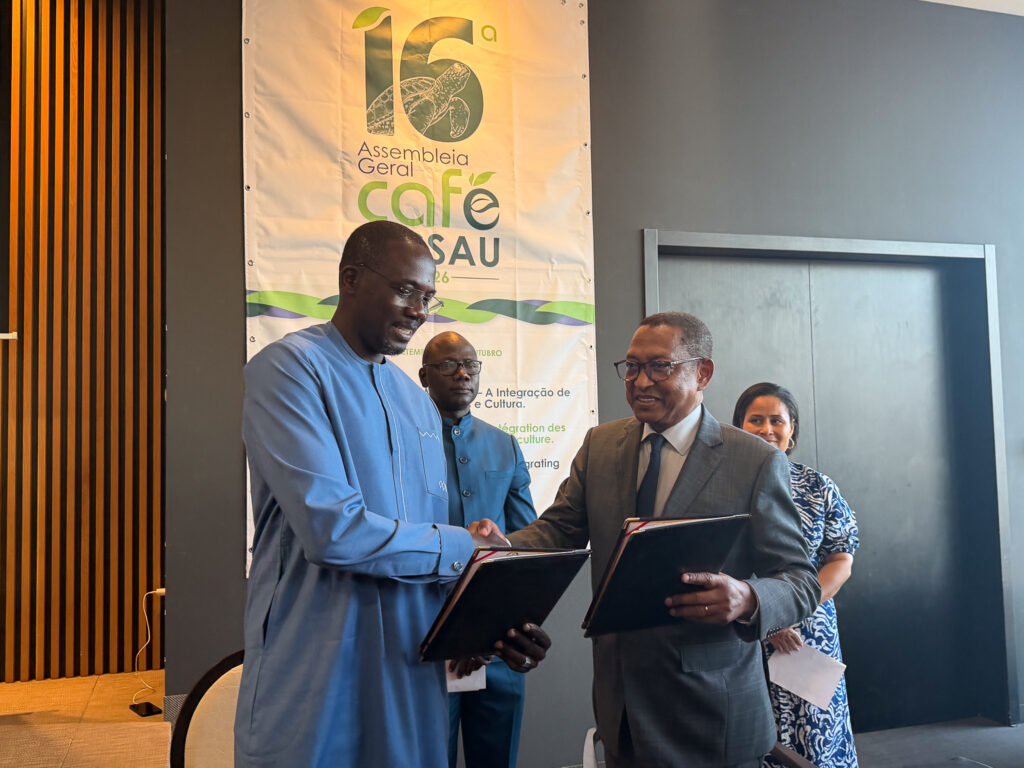
His Excellency Dr Aliou Gori Diouf, Minister for the Environment and Ecological Transition of Senegal, and His Excellency Dr Carlos Pinto Pereira, Minister for the Environment and Climate Action of GuineaBissau, signed this agreement to strengthen their cooperation in support of the conservation and integrated management of the Cacheu–Basse-Casamance cross-border coastal zone, with the aim of contributing to the creation of a cross-border biosphere reserve.
Cross-border cooperation to link territories and strengthen conservation
The signing of the cooperation agreement between Senegal and Guinea-Bissau for the conservation and integrated management of the Cacheu–Basse-Casamance cross-border coastal zone marks an important step in strengthening environmental cooperation between the two countries and the creation of a biosphere reserve. Beyond administrative borders, Cacheu and Basse-Casamance form a single ecological continuum, comprising mangroves, bolongs, mudflats and habitats essential to numerous species. The agreement aims, in particular, to strengthen biodiversity conservation, ecological monitoring, research and the sustainable management of resources, with the ambition of establishing a future cross-border biosphere reserve.
A trend that echoes WIACO’s ‘Corridor’ approach
For Wetlands International Africa – West Coast and Gulf of Guinea (WIACO), this trend illustrates a core belief: conservation can no longer be considered solely at the level of a single site or project.
For several years, WIACO has been working to strengthen the connections between the mangrove areas of Senegal and Guinea-Bissau. In Casamance, the organisation supports the conservation and restoration of mangroves through Rooted Resilience and the Mangrove Capital Africa programme; in Guinea-Bissau, it is active in particular in the Cacheu and Cantanhez landscapes, in collaboration with local communities and national institutions.
🔗 From the site to the landscape, from the landscape to the Corridor
The Mangrove Corridors approach championed by WIACO is very much in line with this shift: moving from isolated interventions to a regional approach that preserves ecological connectivity, strengthens community resilience and promotes better coordination between stakeholders.
In this context, the Senegal–Guinea-Bissau cooperation provides a particularly important institutional framework for:
linking Lower Casamance and Cacheu within a single ecological vision;
strengthening cross-border coordination of conservation actions;
sharing data, knowledge and best practice;
strengthening community involvement in territorial governance;
creating the conditions for joint mobilisation of funding for conservation.