

The Wetland Atlas is LIVE: Mapping ways to acceleratewetland conservation for people, nature and climate
With the world still losing wetlands at an alarming rate, Wetlands International today launched the Wetland Atlas, a global, online platform designed to help clear the ‘data fog’ that is slowing much-needed investment and unlock new action and funding by governments, businesses and investors to accelerate wetland conservation.
Ambitious global targets and effective solutions exist, but action and funding for wetland protection and restoration lag far behind what it is needed. One of the primary reasons: the lack of clear, up-to-date, insightful and easily accessible data and analyses. Exactly what the Wetland Atlas was developed to overcome.
Currently, wetland data is fragmented, siloed, inconsistent, and incomplete. The Wetland Atlas aims to bridge this gap by bringing together available information into a single, accessible tool. By combining biophysical, socio-economic and policy-relevant information, the platform enables governments, donors and investors to prioritise actions where they can have the greatest impact.
While there are costed plans to add extra regions to the tool, the Wetland Atlas currently focuses on the Sahel and the Horn of Africa – increasingly vulnerable regions, where investing in healthy rivers, lakes, and other wetlands is central to not only enhancing water and food security, but also ensuring peace and security.
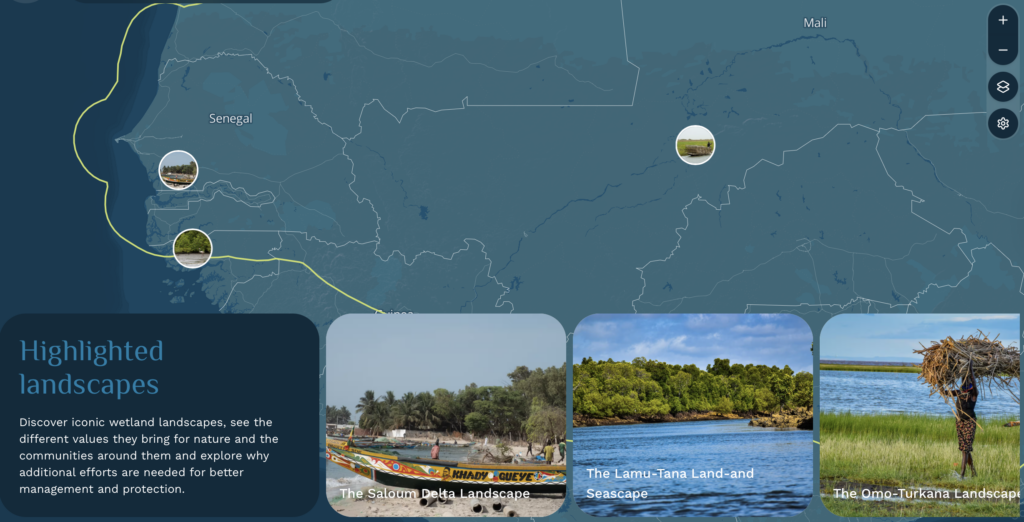
The Wetland Atlas builds on Wetlands International’s long track record of collaborating with partners on cutting edge research, influential policy advocacy, citizen science and innovative mapping tools, including the Global Mangrove Watch, Critical Sites Network Tool, Waterbird Populations Portal, and International Waterbird Census.
It is also a major complementary step in support of the work of GEO-Wetlands partnership, which aims to benefit stakeholders and users with Earth Observation-based mapping, monitoring, inventory, and assessment of wetlands under the aegis of the Ramsar Convention on wetlands. Importantly, the Wetland Atlas is built on open-access principles as well as data drawn from a combination of published research, global and national databases, partner contributions, new data, and user input. It will continue to evolve as new data becomes available.
Specifically, the Atlas is designed as a decision-support platform, helping users to:
- Identify what types of wetlands are where;
- Understand their climate mitigation potential;
- Assess how many people directly depend on surrounding wetlands;
- Determine the protection status of wetlands; and
- Get a broad understanding of expected costs and returns on investments in specific interventions.
The Wetland Atlas was developed with technical support from Aberystwyth University, tool design by Vizzuality, and the generous support of donors advised by Effektiv-Spenden.
Explore the platform now: https://www.wetlandatlas.org/en